📋 Paediatrics
Behavioural Disorders in Children Pediatrics Guide Diagnosis and Management
Learn about behavioural disorders in children in pediatrics including ADHD, oppositional defiant disorder, conduct disorder, autism, anxiety, diagnosis methods, clinical features, and detailed management strategies for pediatric practice.
Choose Your Mode
How do you want to practice?
Study Mode
Learn at your own pace. Get instant feedback and detailed explanations after each question.
Start Studying
Exam Mode
Simulate real exam conditions. Timed questions, full scoring, and performance breakdown.
Take Exam
Strict Exam
Maximum difficulty. Full-screen, no backtracking, strict timing. For serious preparation.
Frequently Asked Questions
❓ What are behavioural disorders in children?
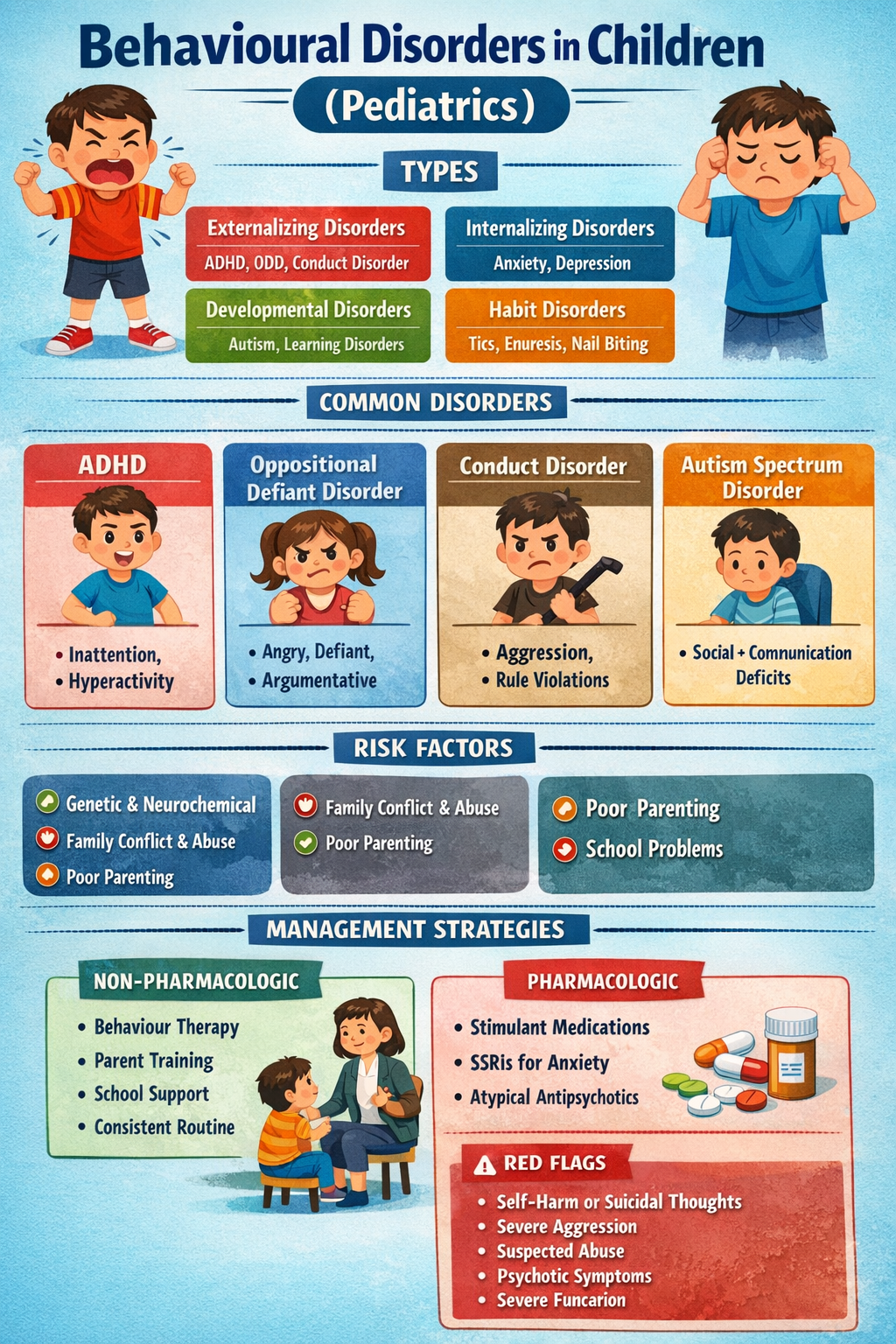
Behavioural disorders are persistent patterns of disruptive, maladaptive, or inappropriate behaviours in children that interfere with daily functioning at home, school, or in social relationships.
❓ What are the most common behavioural disorders in pediatrics?
The most common behavioural disorders include ADHD, Oppositional Defiant Disorder (ODD), Conduct Disorder (CD), Autism Spectrum Disorder (ASD), anxiety disorders, and habit disorders such as tics and thumb sucking.
❓ What is the difference between ADHD and normal childhood activity?
ADHD symptoms are excessive, persistent for more than 6 months, occur in multiple settings, and significantly impair academic, social, or family functioning, unlike normal childhood activity.
❓ How is ADHD diagnosed in children?
ADHD is diagnosed clinically using DSM-5 criteria, requiring symptoms of inattention and/or hyperactivity-impulsivity before age 12, lasting at least 6 months, and present in at least two settings such as home and school.
❓ What is Oppositional Defiant Disorder (ODD)?
ODD is characterized by persistent angry mood, argumentative behaviour, defiance, and vindictiveness toward authority figures lasting at least 6 months without serious aggression or criminal acts.
❓ How is Conduct Disorder different from ODD?
Conduct Disorder involves more severe behaviours including aggression, bullying, cruelty, stealing, vandalism, and violation of others' rights, whereas ODD mainly involves defiance and oppositional behaviour.
❓ What are the risk factors for behavioural disorders in children?
Risk factors include genetic predisposition, neurodevelopmental issues, prematurity, inconsistent parenting, family conflict, trauma, abuse, school bullying, and socioeconomic stress.
❓ What are the key features of Autism Spectrum Disorder?
ASD is characterized by deficits in social communication, poor eye contact, delayed language, restricted interests, repetitive behaviours, and distress with changes in routine.
❓ What are internalizing behavioural disorders?
Internalizing disorders involve emotional problems such as anxiety, depression, social withdrawal, and somatic complaints rather than disruptive outward behaviour.
❓ What is the first-line treatment for most behavioural disorders?
Non-pharmacologic interventions such as behavioural therapy, parent management training, structured routines, and school-based support are first-line treatments.
❓ When are medications used in behavioural disorders?
Medications are used when symptoms are severe, impair functioning, or when behavioural therapy alone is insufficient, such as stimulants for ADHD or atypical antipsychotics for severe aggression.
❓ What are common side effects of stimulant medications in ADHD?
Common side effects include decreased appetite, insomnia, abdominal pain, headache, mild increase in heart rate and blood pressure, and potential growth suppression with long-term use.
❓ What is Atomoxetine used for in pediatrics?
Atomoxetine is a non-stimulant medication used for ADHD, especially helpful when comorbid anxiety, tics, or stimulant intolerance is present.
❓ How are habit disorders like thumb sucking managed?
Mild habits require reassurance and avoidance of punishment, while persistent habits may need positive reinforcement, habit reversal therapy, and addressing underlying stressors.
❓ What is the best initial management of primary nocturnal enuresis?
Enuresis alarm therapy and behavioural interventions are first-line treatments, with desmopressin considered when alarms fail or for short-term control.
❓ What red flags require urgent psychiatric referral?
Red flags include suicidal ideation, self-harm, severe aggression, suspected abuse, psychotic symptoms, and significant functional impairment.
❓ How can parents help manage behavioural disorders at home?
Parents can use consistent discipline, positive reinforcement, structured routines, clear communication, limiting screen time, ensuring adequate sleep, and engaging in parent training programs.
❓ Can behavioural disorders affect academic performance?
Yes, disorders like ADHD, anxiety, autism, and conduct disorder commonly impair concentration, learning, classroom behaviour, and peer relationships.
❓ What tools are used for behavioural disorder assessment?
Common tools include the Vanderbilt scale, Conners rating scale, Child Behaviour Checklist (CBCL), autism screening tools (M-CHAT), and structured psychiatric interviews.
❓ What is the long-term prognosis of behavioural disorders in children?
Prognosis depends on early diagnosis and intervention. ADHD may persist into adulthood, ODD can progress to conduct disorder, and untreated conduct disorder increases risk of antisocial personality disorder.