📋 Paediatrics
Breastfeeding and Breast Milk in Pediatrics Complete Guide Benefits Composition Management
Learn a detailed pediatrics guide on breastfeeding and breast milk including physiology, composition, benefits for infant and mother, feeding techniques, common problems, contraindications, and clinical management.
Choose Your Mode
How do you want to practice?
Study Mode
Learn at your own pace. Get instant feedback and detailed explanations after each question.
Start Studying
Exam Mode
Simulate real exam conditions. Timed questions, full scoring, and performance breakdown.
Take Exam
Strict Exam
Maximum difficulty. Full-screen, no backtracking, strict timing. For serious preparation.
Frequently Asked Questions
❓ What is exclusive breastfeeding in pediatrics?
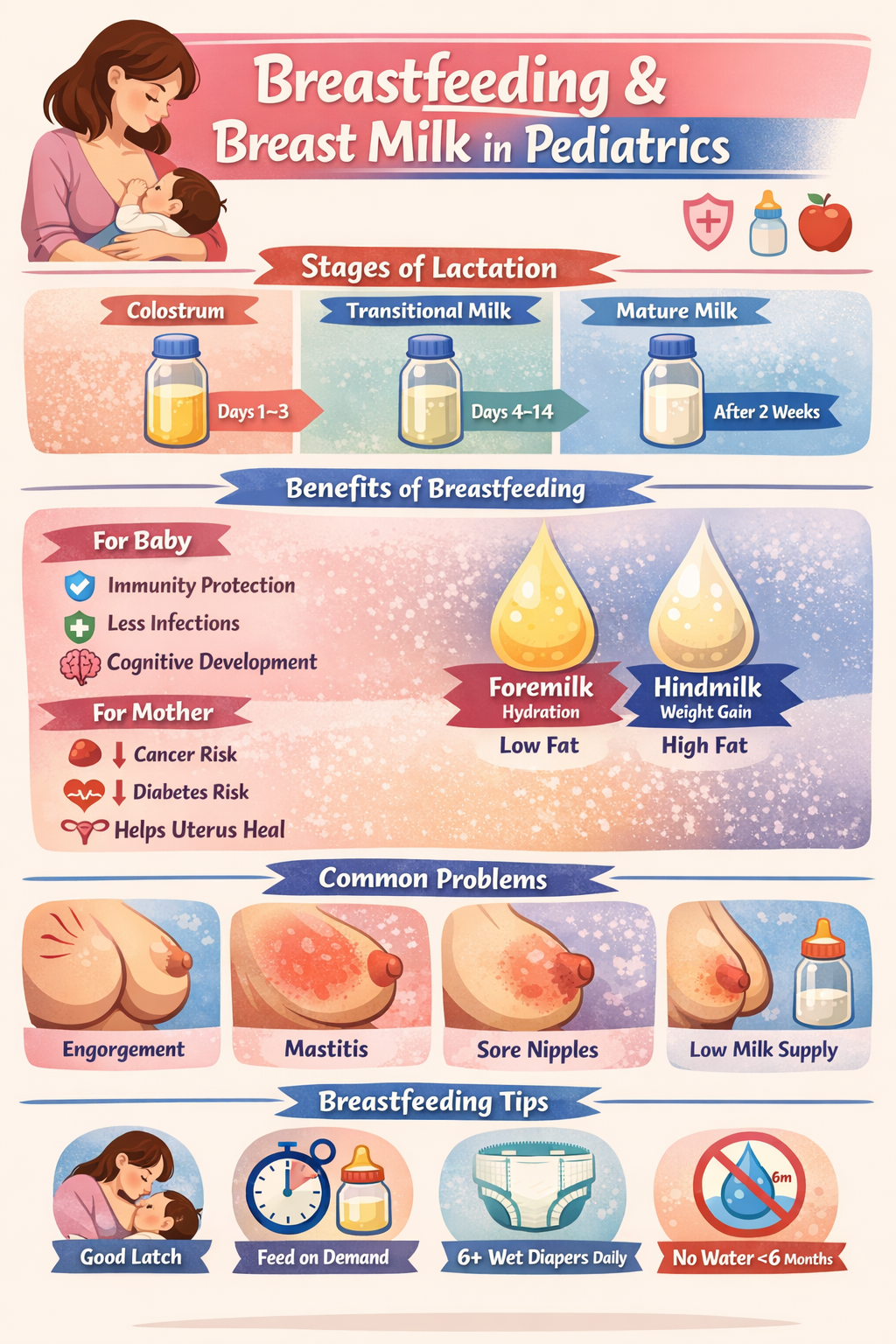
Exclusive breastfeeding means the infant receives only breast milk (no water, formula, or other foods) for the first 6 months, except for medicines or vitamin supplements.
❓ Why is colostrum important for newborns?
Colostrum is the first milk produced in the first 1–3 days. It is rich in IgA antibodies, lactoferrin, and immune cells, providing the baby’s first protection against infections.
❓ When does mature breast milk usually start?
Mature breast milk is established after about 2 weeks postpartum, following the colostrum and transitional milk phases.
❓ What are the main benefits of breastfeeding for the infant?
Breastfeeding provides ideal nutrition, boosts immunity, reduces infections like diarrhea and pneumonia, lowers risk of obesity and diabetes, and improves neurodevelopmental outcomes.
❓ What are the benefits of breastfeeding for the mother?
Breastfeeding helps uterine involution, reduces postpartum hemorrhage, provides natural contraception (LAM), and decreases long-term risk of breast and ovarian cancer.
❓ How often should a newborn breastfeed?
Newborns should feed 8–12 times per day, on demand, rather than by a fixed schedule.
❓ What is the difference between foremilk and hindmilk?
Foremilk is the initial milk, higher in water and lactose for hydration. Hindmilk comes later in the feed and is richer in fat and calories, supporting weight gain.
❓ How can a mother know the baby is getting enough breast milk?
Adequate intake is suggested by at least 6 wet diapers/day after day 5, regular stools, good weight gain after initial loss, and a satisfied baby after feeds.
❓ Is it normal for babies to lose weight after birth?
Yes. Weight loss up to 7–10% in the first week is normal. Birth weight is usually regained by 10–14 days.
❓ What causes cracked or sore nipples during breastfeeding?
The most common cause is poor latch or incorrect positioning. Correcting attachment usually resolves the problem.
❓ What is mastitis and how is it managed?
Mastitis is breast inflammation with fever, pain, and redness. Management includes continuing breastfeeding, effective breast emptying, and antibiotics such as dicloxacillin or cephalexin.
❓ Should breastfeeding be stopped during mastitis?
No. Breastfeeding should continue unless there is an abscess requiring drainage, because emptying the breast helps recovery.
❓ What are absolute contraindications to breastfeeding?
Absolute contraindications include infant classic galactosemia and maternal conditions such as HIV (in high-resource settings), HTLV infection, and chemotherapy use.
❓ Can breastfeeding prevent necrotizing enterocolitis (NEC) in preterm infants?
Yes. Breast milk provides immune and anti-inflammatory factors that significantly reduce the risk of NEC in preterm babies.
❓ How long can expressed breast milk be stored safely?
Breast milk can be stored for 4 hours at room temperature, 4 days in the refrigerator, and up to 6 months in a freezer at −18°C.
❓ Do exclusively breastfed babies need water in hot climates?
No. Breast milk provides sufficient hydration even in hot climates. More frequent feeding is recommended instead of giving water.
❓ What is Lactational Amenorrhea Method (LAM)?
LAM is a natural contraceptive method effective up to 6 months postpartum if the mother is exclusively breastfeeding, amenorrheic, and the infant is under 6 months old.
❓ When should complementary feeding be started?
Complementary feeding should begin at 6 months while continuing breastfeeding up to 2 years or beyond.
❓ Do breastfed infants need vitamin supplementation?
Yes. Vitamin D supplementation is recommended because breast milk contains low vitamin D levels, preventing deficiency and rickets.
❓ What are the key counseling points for breastfeeding mothers?
Feed on demand, ensure proper latch, avoid water or formula in the first 6 months, seek early help for breastfeeding problems, and continue breastfeeding during mild infant illness.